

Solid or engineeredhardwood?
Compare before you buy.
Both floors look like real wood, because both are. The differences are in how they are built, how they handle moisture, and how long they last.
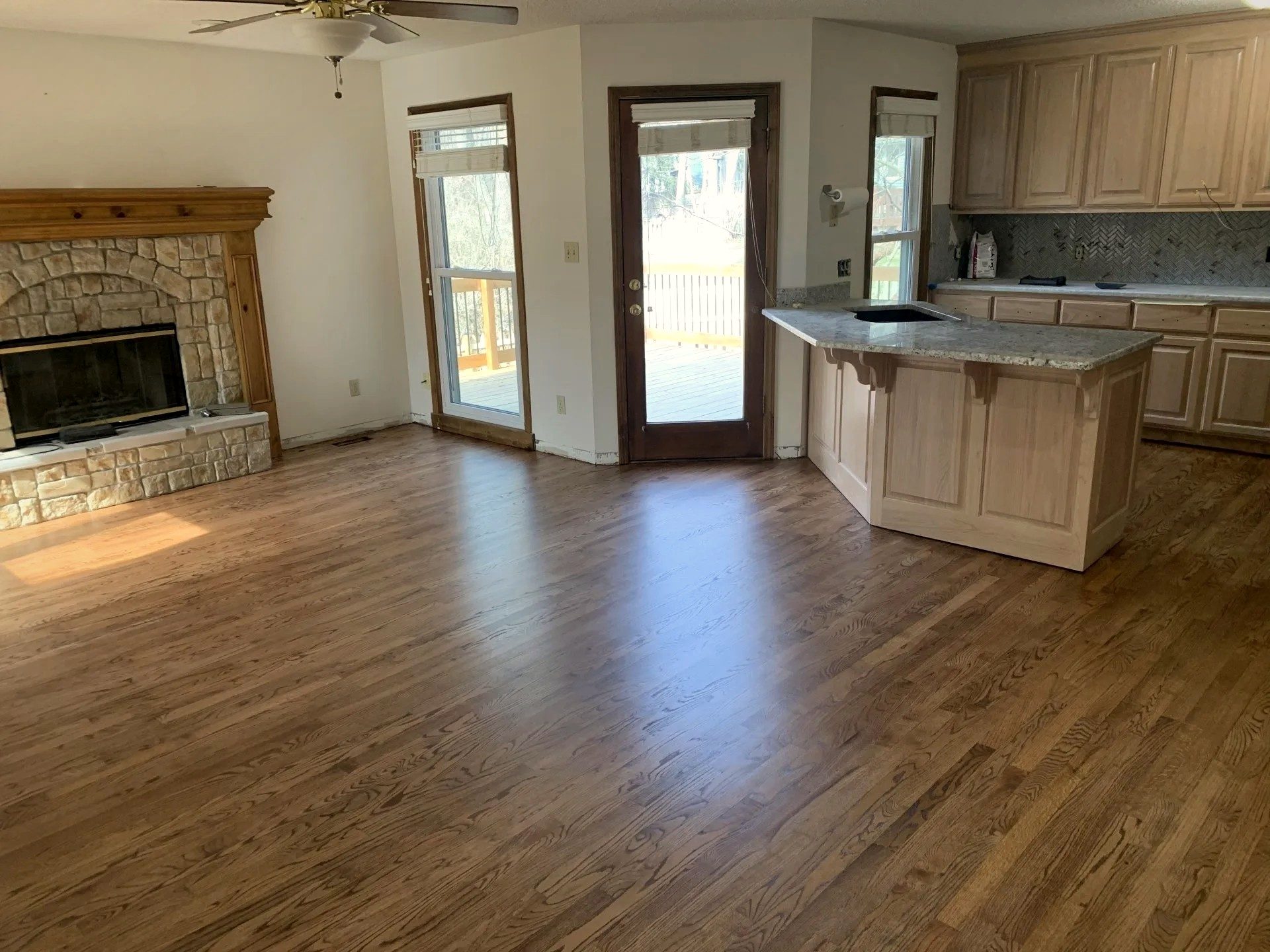
Solid hardwood is cut from one piece of wood, can be sanded and refinished many times, and lasts the longest. Engineered hardwood has a real wood top layer over plywood, handles humidity and concrete subfloors better, and costs less. FF Construction in Olathe installs both and can help you choose.
A new floor changes how a whole home looks and feels. Hardwood has been a favorite for a long time because it looks good and feels warm underfoot. Engineered hardwood looks much the same, but it is built differently, and that changes how it performs. Your budget, your home and how you use each room all matter, so here is how the two compare.
How each one is made
Solid hardwood is made entirely of solid wood. Oak, walnut and maple are common species. Boards are milled into long planks with a tongue on one edge and a groove on the other, so they interlock when installed. Because the board is solid wood all the way through, it can be sanded and refinished many times.
Engineered hardwood is built in layers. A thin layer of real hardwood is bonded to a plywood core. That gives it the look of real wood and good stability. It is usually less expensive, and some products are easier for a do-it-yourselfer to install.
Moisture and heat
Both types handle heat well. Moisture is where they split. Humidity makes solid hardwood swell and warp, so it is not a good fit for wet areas or very humid rooms. Solid hardwood is also generally not installed directly against a concrete slab, because moisture moves up through concrete and can damage the boards.
Engineered hardwood holds up better against humidity because the plywood core resists warping. If the floor has to go over a concrete subfloor, engineered hardwood is usually the better choice.
How they look
The two look very similar. If color range matters most, solid hardwood offers more choices. It comes in thicker, narrower boards, and either pre-finished or unfinished. Engineered boards are generally wider and usually pre-finished, with beveled edges that leave a slight groove between planks. In the end it comes down to the look you like.
Cleaning and care
Both are easy to care for. Sweep and vacuum regularly. For a deeper clean, use a barely damp mop with a wood floor cleaner, and wipe up spills right away. Solid hardwood is especially sensitive to water, so never leave it wet. Avoid steam mops on either floor, because steam can get between the planks and cause warping.
Durability and refinishing
Solid hardwood wins here. It can be sanded and refinished many times over its life. Engineered hardwood can be refinished only a limited number of times, often once or twice, depending on how thick the top layer is. Sand it too often and the wood layer wears through.
Pre-finished planks have a hard factory-applied finish that holds up well. Renewing the surface coat every so often helps any wood floor keep its look.
How long each one lasts
Solid hardwood lasts the longest. With good care it commonly lasts from 30 to 100 years, depending on upkeep and how many times it has been sanded and refinished. Engineered hardwood commonly lasts from 20 to 30 years, and it can last longer when the surface coat is renewed and the floor is kept well.
Installation
Solid hardwood is more demanding to install. It uses a tongue-and-groove system, and the boards are blind-nailed to the subfloor through the tongues. Engineered hardwood has more options. Some boards click together. Others are blind-nailed, and some can be glued down over a concrete subfloor.
Resale value
Many homeowners think about resale. Solid hardwood is long-lived, and buyers and agents tend to see it as a plus. Engineered hardwood looks very similar, so the difference is mostly in how long the floor lasts. If resale matters most to you, solid hardwood is the safer pick.
The bottom line
Engineered hardwood used to be thought of as a lesser copy of solid wood. Today it is a good alternative with a similar look and feel, solid quality, competitive prices and a long life. It uses only a thin layer of real hardwood. Solid hardwood still leads on lifespan and refinishing. Choose engineered for moisture, concrete subfloors and a lower price. Choose solid when you want the longest-lasting floor.
Fantastic Floors, the flooring showroom of FF Construction, offers free advice and a free in-home estimate across the Kansas City area, with many brands and styles to look at in person.
Solid vs. engineeredhardwood
| Solid hardwood | Engineered hardwood | |
|---|---|---|
| Built from | Solid wood all the way through | Real wood top layer over a plywood core |
| Moisture | Swells and warps in humidity | Handles humidity better |
| Over concrete | Generally not installed directly on a slab | A good choice over a concrete subfloor |
| Refinishing | Sanded and refinished many times | Limited, often once or twice |
| Lifespan | Commonly 30 to 100 years | Commonly 20 to 30 years |
| Installation | Tongue and groove, blind-nailed | Click-lock, nailed or glued |
| Cost | Higher | Usually lower |
Related services
Flooring
Fantastic Floors, the flooring showroom of FF Construction, installs hardwood, engineered wood, luxury vinyl plank, laminate, tile and carpet across the Kansas City metro.
Residential services
FF Construction remodels homes across the Kansas City metro, and Fantastic Floors installs the floors and fabricates the countertops. One family company, one schedule.
Choose yourfloor with us.
See samples at the Olathe showroom and get a free estimate.